The Ascent of Maritime Trade 1700-2025
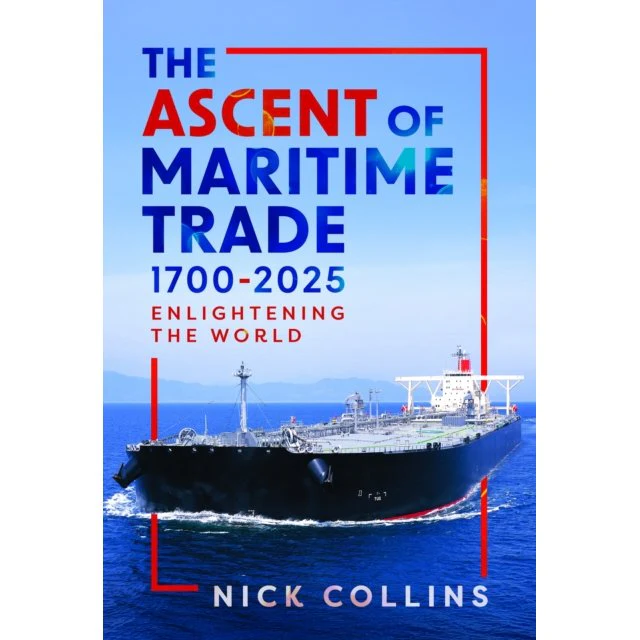
Third volume of the critically-acclaimed series stressing maritime trade as the driver of world history, wealth-creation, technological inventiveness, art and literature. This book tackles the Maritime Enlightenment, which spurred economic liberalism and humanitarianism, unlike its continental version, breaking free from historic attitudes to slavery and serfdom, contextualising current debates on imperial history. The immediate cause of America's War of Independence is revealed to be about illegal maritime trade.
Jefferson and Madison never understood the latent wealth-creating power of US trade, misdirecting energies for some years. US north-south divisions were exacerbated by trade tariffs more than slavery. The failure of France's Revolution and Germany's 20th-century wars were also failures to appreciate its importance.
The post 1945 rise of Japan, Korea, Taiwan, Singapore, China and UAE were directly because of their encouragement of maritime trade and shipping. Britain's decline was heralded by political indifference then hostility, contrasting with its previous encouragement; its greatest strength. Nick's chapter on shipping's efforts to achieve net-zero is a must read for anyone involved in the green debate.
Written by someone at the heart of maritime trade since the 1970s, the series is an important counterweight to political history we are usually fed, a different way of thinking about the world, past and present.
About the Author
Nick Collins read history at Magdalene College Cambridge, was pressed to continue academic research and writing but chose to go into maritime trade with H Clarkson & Co, the largest company in the field with world-wide connections. He was director of the main company and of subsidiary companies in Asia including the Far East and India, Dubai and the USA. So he has done business with many of the countries in the regions featured in the book and brings practical hands-on experience to academic research to produce a unique work.
Original: $40.12
-70%$40.12
$12.04The Ascent of Maritime Trade 1700-2025
Third volume of the critically-acclaimed series stressing maritime trade as the driver of world history, wealth-creation, technological inventiveness, art and literature. This book tackles the Maritime Enlightenment, which spurred economic liberalism and humanitarianism, unlike its continental version, breaking free from historic attitudes to slavery and serfdom, contextualising current debates on imperial history. The immediate cause of America's War of Independence is revealed to be about illegal maritime trade.
Jefferson and Madison never understood the latent wealth-creating power of US trade, misdirecting energies for some years. US north-south divisions were exacerbated by trade tariffs more than slavery. The failure of France's Revolution and Germany's 20th-century wars were also failures to appreciate its importance.
The post 1945 rise of Japan, Korea, Taiwan, Singapore, China and UAE were directly because of their encouragement of maritime trade and shipping. Britain's decline was heralded by political indifference then hostility, contrasting with its previous encouragement; its greatest strength. Nick's chapter on shipping's efforts to achieve net-zero is a must read for anyone involved in the green debate.
Written by someone at the heart of maritime trade since the 1970s, the series is an important counterweight to political history we are usually fed, a different way of thinking about the world, past and present.
About the Author
Nick Collins read history at Magdalene College Cambridge, was pressed to continue academic research and writing but chose to go into maritime trade with H Clarkson & Co, the largest company in the field with world-wide connections. He was director of the main company and of subsidiary companies in Asia including the Far East and India, Dubai and the USA. So he has done business with many of the countries in the regions featured in the book and brings practical hands-on experience to academic research to produce a unique work.
Product Information
Product Information
Shipping & Returns
Shipping & Returns
Description
Third volume of the critically-acclaimed series stressing maritime trade as the driver of world history, wealth-creation, technological inventiveness, art and literature. This book tackles the Maritime Enlightenment, which spurred economic liberalism and humanitarianism, unlike its continental version, breaking free from historic attitudes to slavery and serfdom, contextualising current debates on imperial history. The immediate cause of America's War of Independence is revealed to be about illegal maritime trade.
Jefferson and Madison never understood the latent wealth-creating power of US trade, misdirecting energies for some years. US north-south divisions were exacerbated by trade tariffs more than slavery. The failure of France's Revolution and Germany's 20th-century wars were also failures to appreciate its importance.
The post 1945 rise of Japan, Korea, Taiwan, Singapore, China and UAE were directly because of their encouragement of maritime trade and shipping. Britain's decline was heralded by political indifference then hostility, contrasting with its previous encouragement; its greatest strength. Nick's chapter on shipping's efforts to achieve net-zero is a must read for anyone involved in the green debate.
Written by someone at the heart of maritime trade since the 1970s, the series is an important counterweight to political history we are usually fed, a different way of thinking about the world, past and present.
About the Author
Nick Collins read history at Magdalene College Cambridge, was pressed to continue academic research and writing but chose to go into maritime trade with H Clarkson & Co, the largest company in the field with world-wide connections. He was director of the main company and of subsidiary companies in Asia including the Far East and India, Dubai and the USA. So he has done business with many of the countries in the regions featured in the book and brings practical hands-on experience to academic research to produce a unique work.