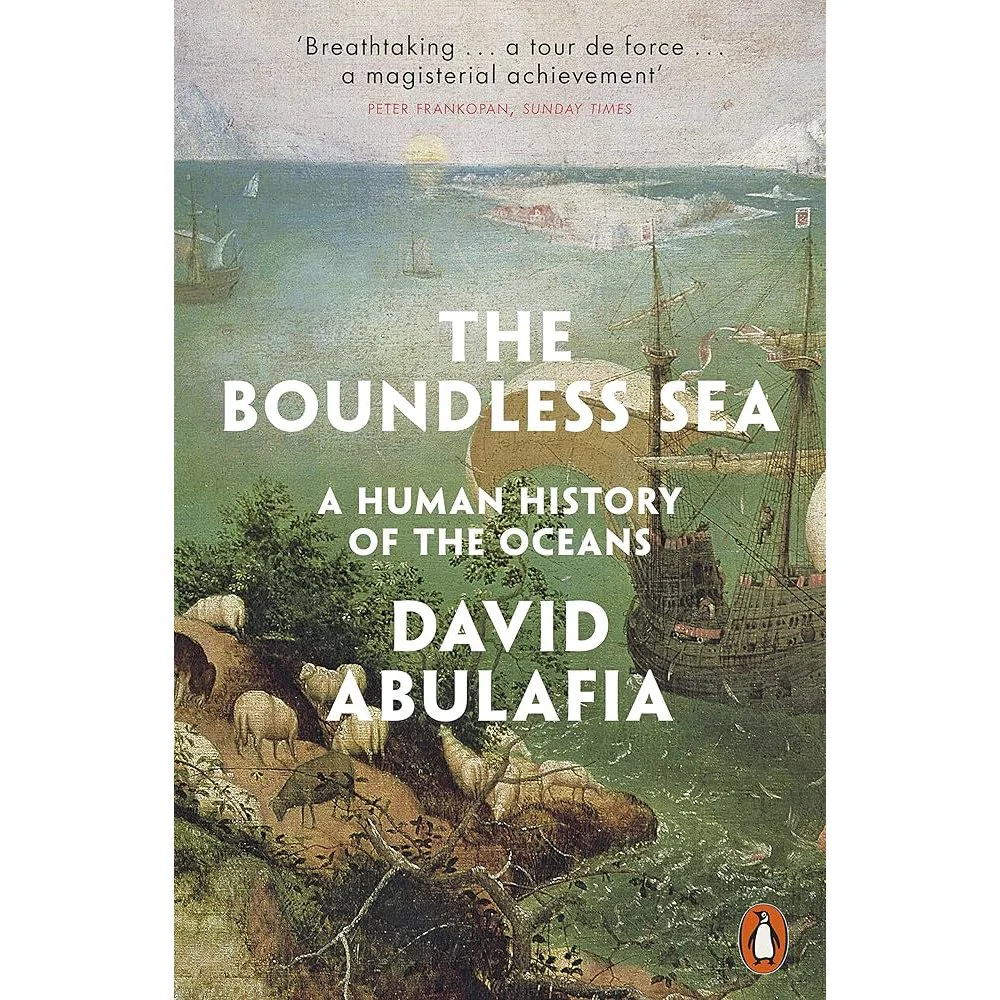
The Boundless Sea
For most of human history, the seas and oceans have been the main means of long-distance trade and communication between peoples. This book traces the history of human movement and interaction around and across the world's greatest bodies of water, charting our relationship with the oceans from the time of the first voyagers. Following merchants, explorers, pirates, cartographers and travellers in their quests for spices, gold, ivory, slaves, lands for settlement and knowledge of what lay beyond, David Abulafia has created an extraordinary narrative of humanity and the oceans. And today, as plastic refuse covers thousands of square miles of the waters, and once exotic trading cities and outposts are replaced by vast, mechanized container ports, he asks - what next for our oceans and our world?
About the Author
David Abulafia is Emeritus Professor of Mediterranean History at the University of Cambridge, a Fellow of Gonville and Caius College and a former Chairman of the Cambridge History Faculty. His previous books include Frederick II, The Western Mediterranean Kingdoms and The Great Sea, which has been translated into a dozen languages. He is a member of the Academia Europaea, and in 2003 was made Commendatore dell'Ordine della Stella della Solidarietà Italiana in recognition of his work on Italian and Mediterranean history.
The Boundless Sea
For most of human history, the seas and oceans have been the main means of long-distance trade and communication between peoples. This book traces the history of human movement and interaction around and across the world's greatest bodies of water, charting our relationship with the oceans from the time of the first voyagers. Following merchants, explorers, pirates, cartographers and travellers in their quests for spices, gold, ivory, slaves, lands for settlement and knowledge of what lay beyond, David Abulafia has created an extraordinary narrative of humanity and the oceans. And today, as plastic refuse covers thousands of square miles of the waters, and once exotic trading cities and outposts are replaced by vast, mechanized container ports, he asks - what next for our oceans and our world?
About the Author
David Abulafia is Emeritus Professor of Mediterranean History at the University of Cambridge, a Fellow of Gonville and Caius College and a former Chairman of the Cambridge History Faculty. His previous books include Frederick II, The Western Mediterranean Kingdoms and The Great Sea, which has been translated into a dozen languages. He is a member of the Academia Europaea, and in 2003 was made Commendatore dell'Ordine della Stella della Solidarietà Italiana in recognition of his work on Italian and Mediterranean history.
Product Information
Product Information
Shipping & Returns
Shipping & Returns
Description
For most of human history, the seas and oceans have been the main means of long-distance trade and communication between peoples. This book traces the history of human movement and interaction around and across the world's greatest bodies of water, charting our relationship with the oceans from the time of the first voyagers. Following merchants, explorers, pirates, cartographers and travellers in their quests for spices, gold, ivory, slaves, lands for settlement and knowledge of what lay beyond, David Abulafia has created an extraordinary narrative of humanity and the oceans. And today, as plastic refuse covers thousands of square miles of the waters, and once exotic trading cities and outposts are replaced by vast, mechanized container ports, he asks - what next for our oceans and our world?
About the Author
David Abulafia is Emeritus Professor of Mediterranean History at the University of Cambridge, a Fellow of Gonville and Caius College and a former Chairman of the Cambridge History Faculty. His previous books include Frederick II, The Western Mediterranean Kingdoms and The Great Sea, which has been translated into a dozen languages. He is a member of the Academia Europaea, and in 2003 was made Commendatore dell'Ordine della Stella della Solidarietà Italiana in recognition of his work on Italian and Mediterranean history.