Weems & Plath 18" Parallel Rule
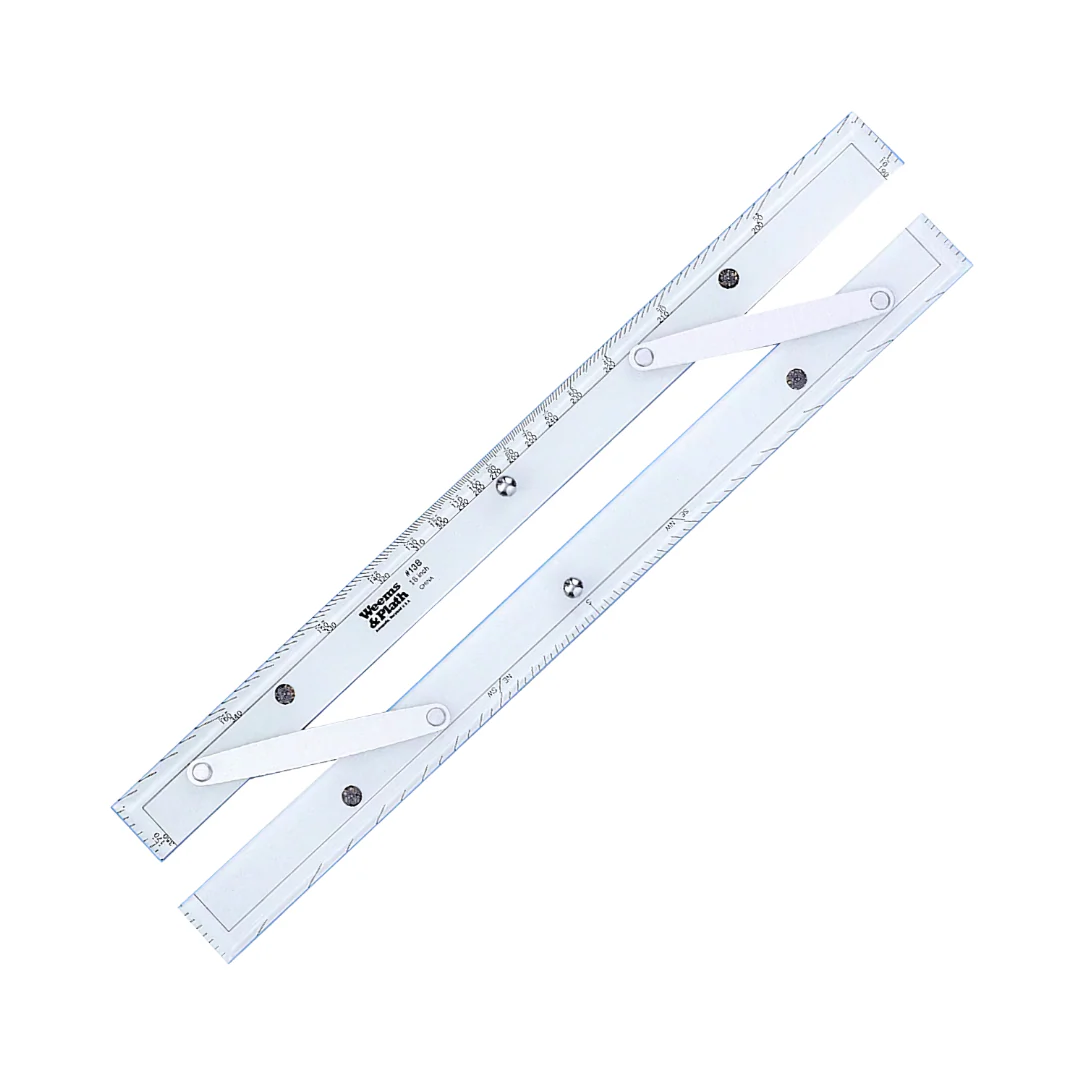
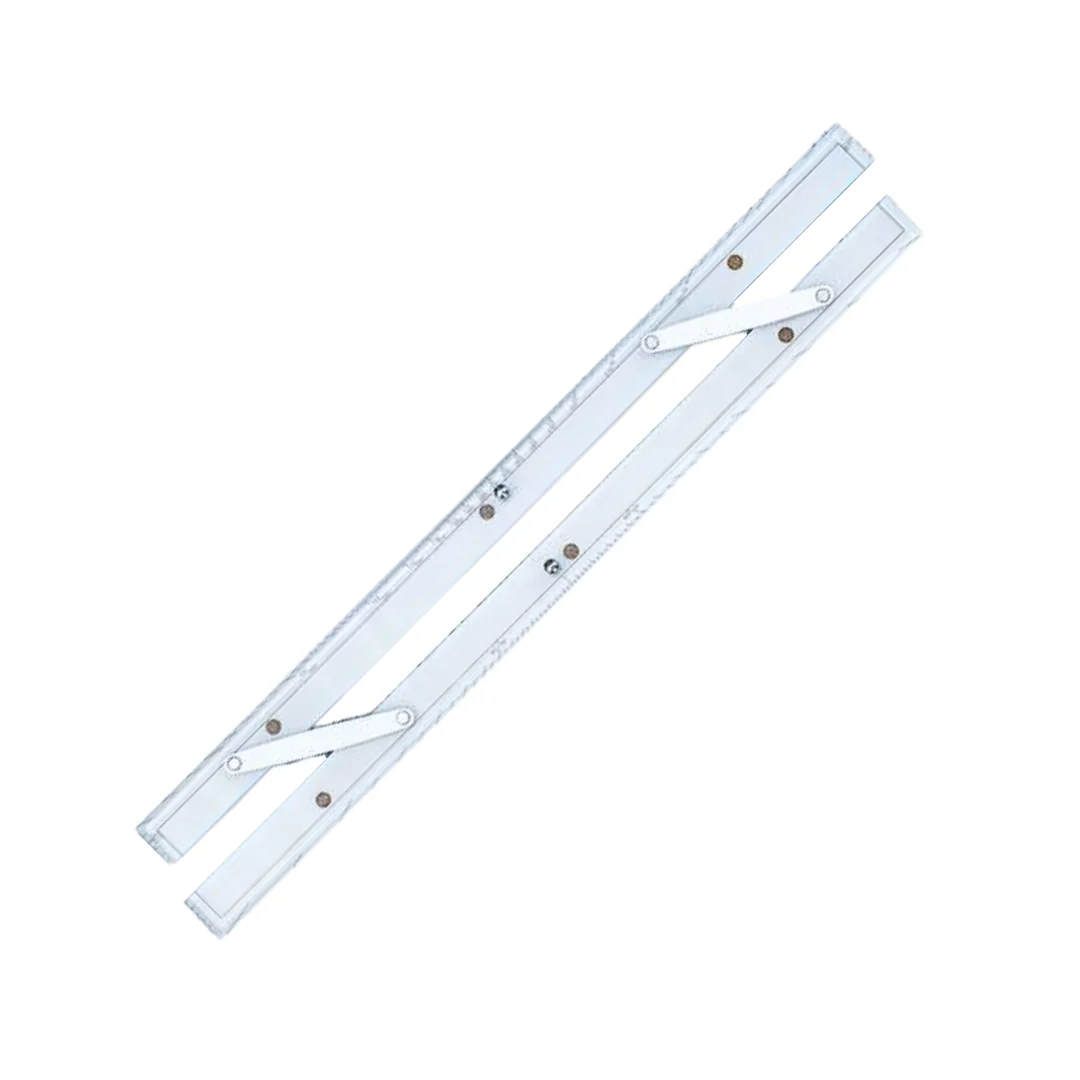
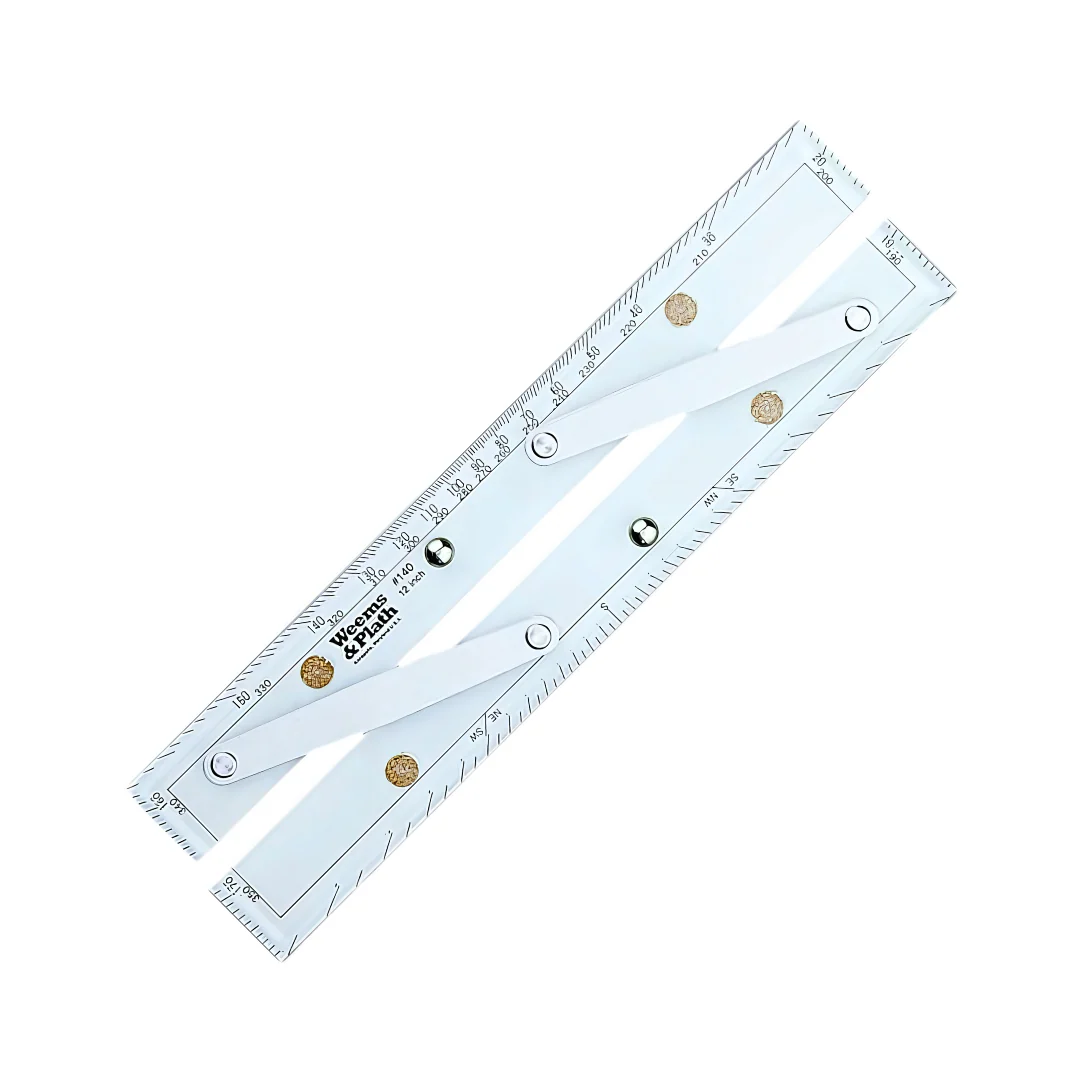
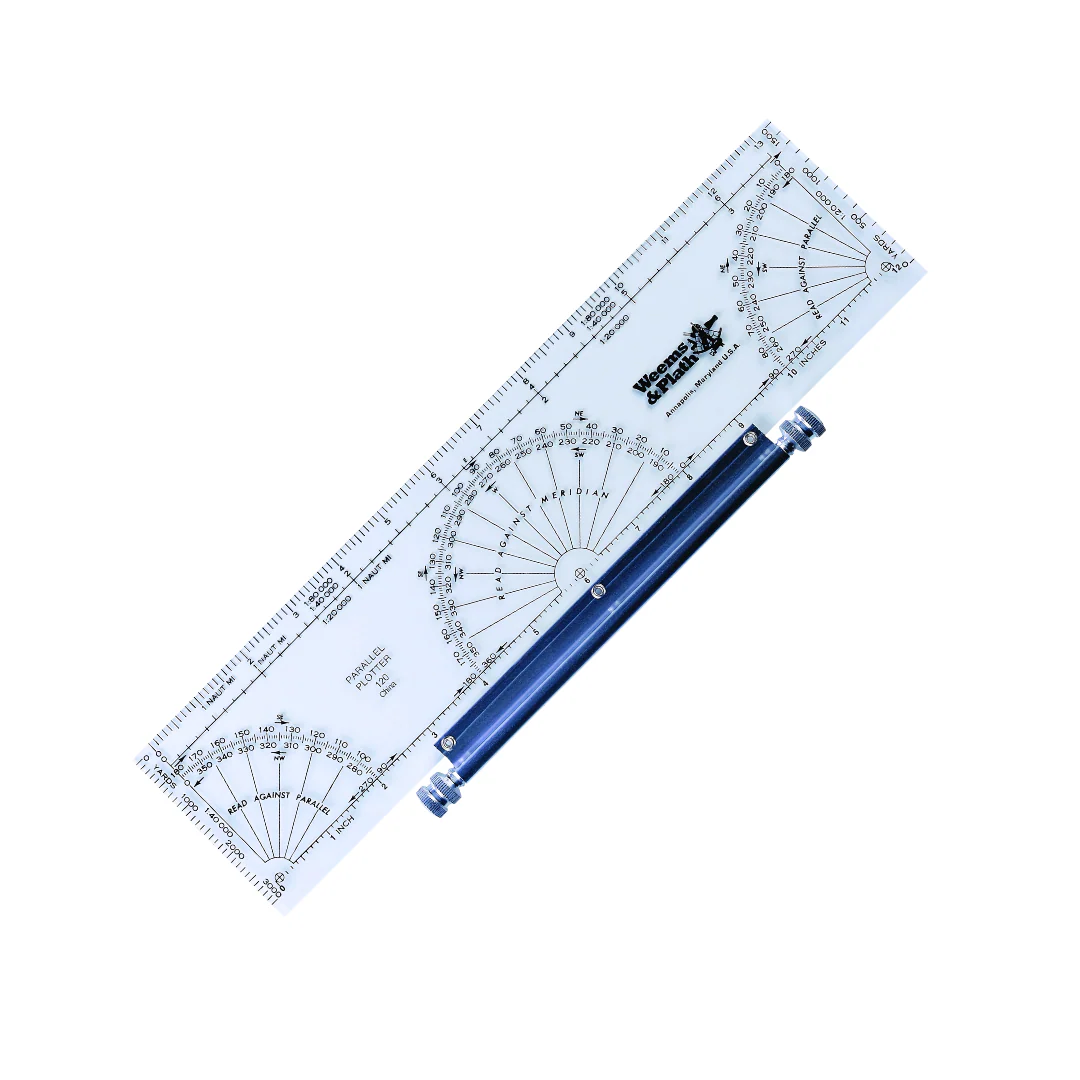
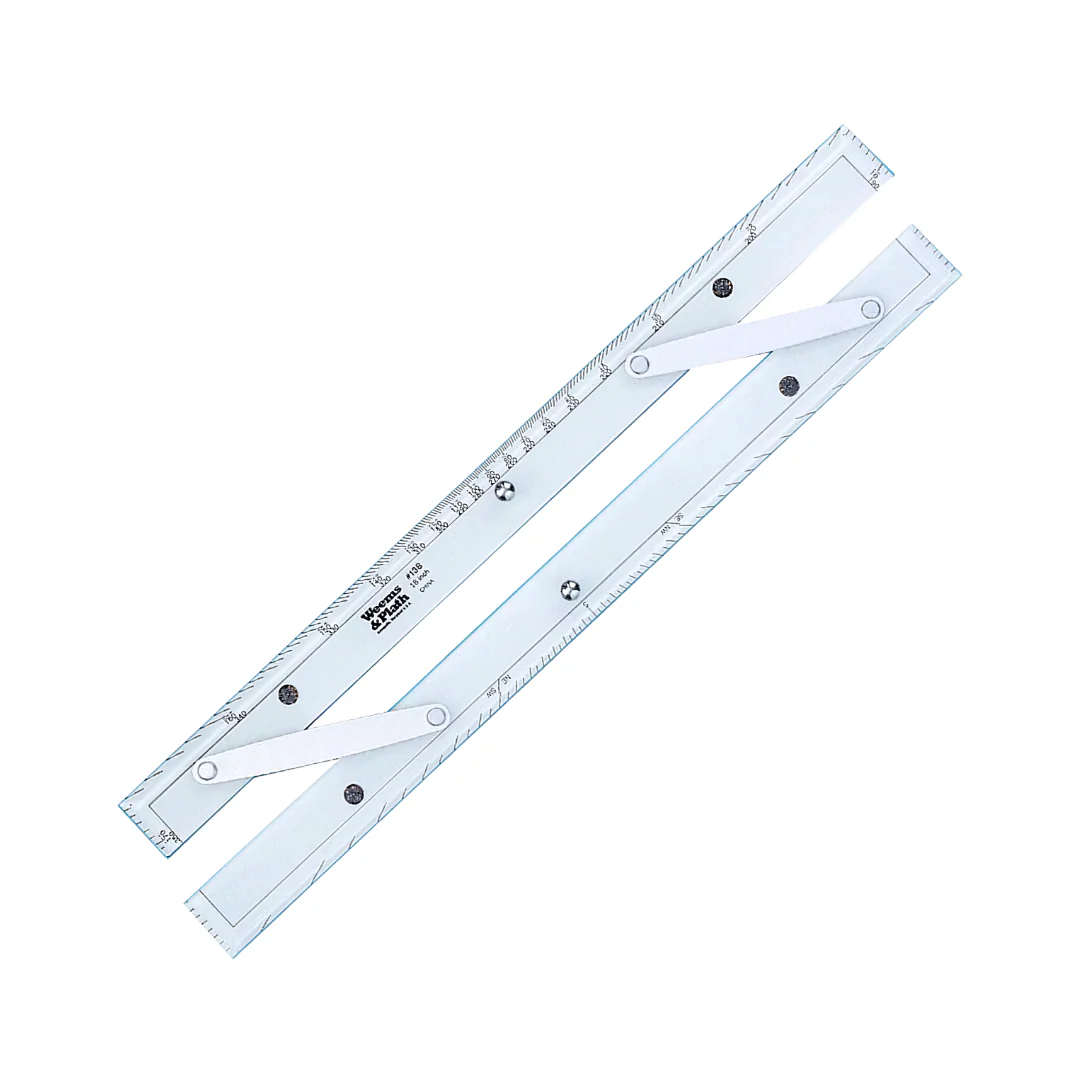
The Weems & Plath 18" Aluminium Arm Parallel Rule is a favourite among sailors, offering a reliable and efficient way to plot courses and measure distances on nautical charts. The integrated protractor scale (Captain Field pattern markings) allows you to measure angles when there isn't a convenient compass rose nearby on your chart.
This parallel rule is slightly longer than the best-selling 15" version, making it ideal for use on larger chart tables. It's a popular choice for Royal Navy and Merchant Navy navigators and cadets, as well as anyone who appreciates a longer reach and added versatility.
Features:
- 18-inch (45.7 cm) length
- Brushed aluminium arms
- Polished aluminium handles
- Milled acrylic with bevelled edges
- Integrated protractor scale (Captain Fields Pattern)
- Protective plastic sleeve
- Limited Lifetime Warranty
How to Use a Parallel Rule
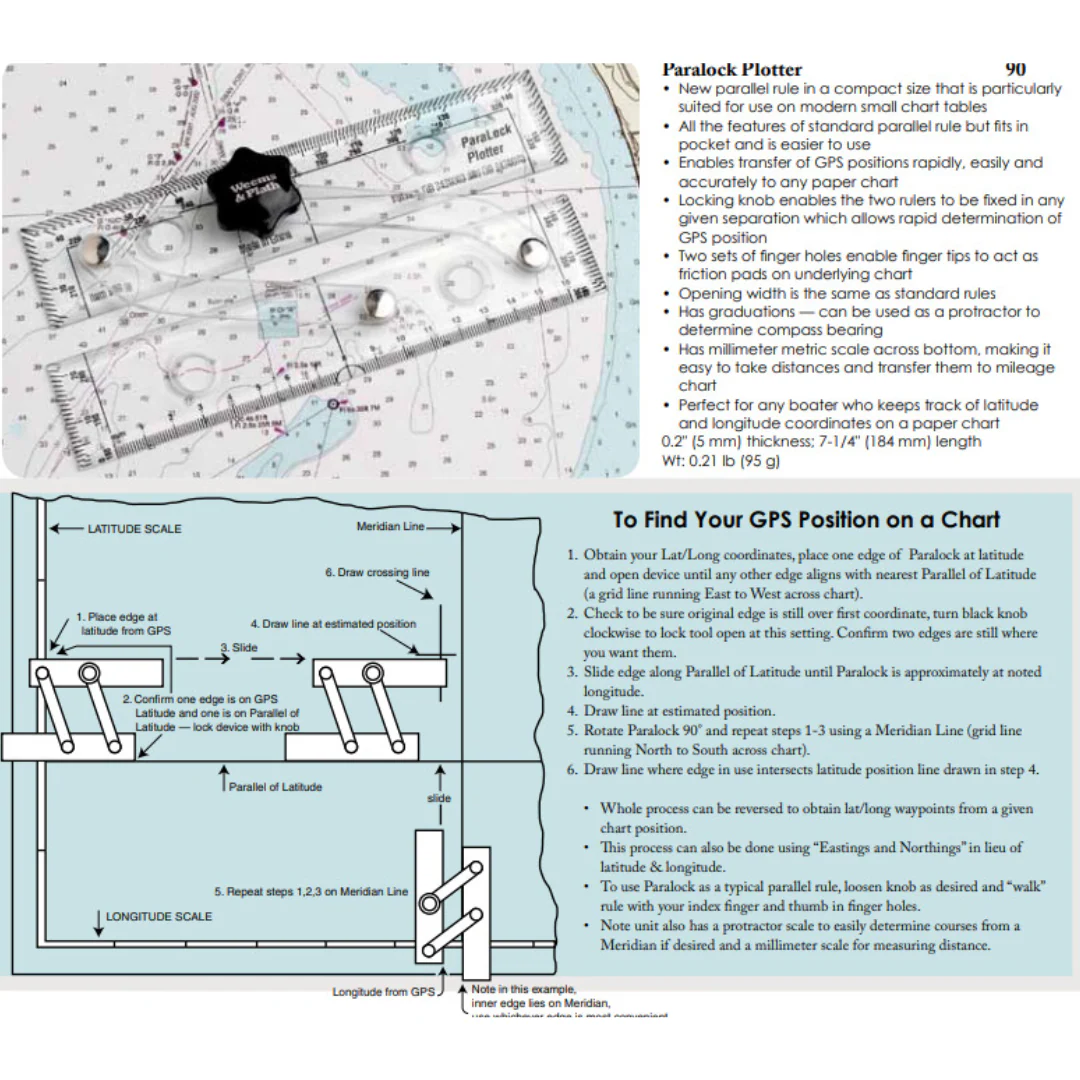
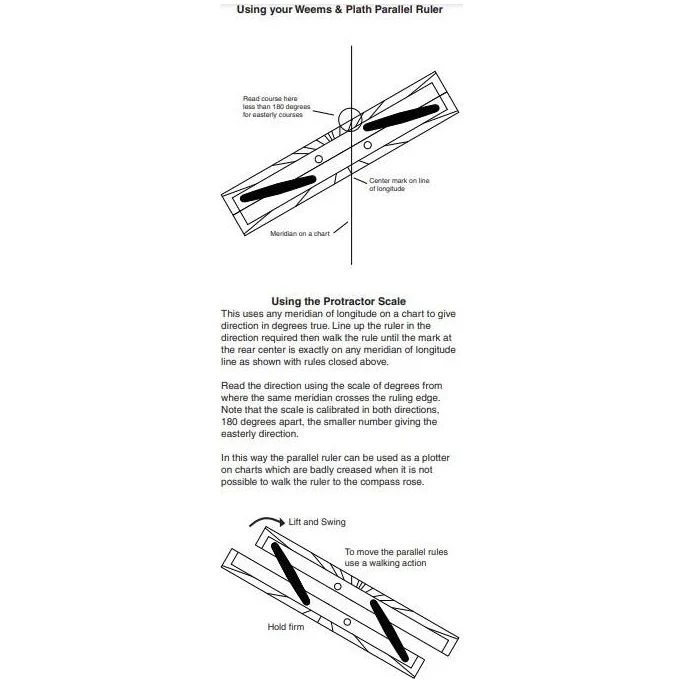
A parallel rule consists of two straight edges joined by hinges, allowing them to move closer or further apart while remaining parallel. To use it, place one edge along your desired course or bearing, then hold it securely while moving the other edge to a new position on the chart. This allows you to transfer lines and angles accurately, making it an essential tool for navigation and chartwork.
A History of Precision
Parallel rules have been used by navigators for centuries to draw parallel lines on charts. The earliest versions date back to the 16th century, and the design was further refined in the 19th century by Captain William Andrew Field, who added a protractor scale and compass points for easier bearing measurement.
About Weems & Plath
Founded in 1928 by Lieutenant Commander Philip Van Horn Weems, Weems & Plath has a long and distinguished history of providing sailors with high-quality nautical instruments and navigational tools. From the Weems Plotter to the Second Setting Watch, their innovations have helped shape the world of navigation.
Today, Weems & Plath continues to uphold its tradition of craftsmanship and precision, offering a wide range of navigational tools and instruments for sailors of all levels.
Beyond its nautical applications, this parallel rule can also be used for drafting, surveying, and other tasks that require precise parallel lines.
Original: $35.57
-70%$35.57
$10.67More Images
Weems & Plath 18" Parallel Rule
The Weems & Plath 18" Aluminium Arm Parallel Rule is a favourite among sailors, offering a reliable and efficient way to plot courses and measure distances on nautical charts. The integrated protractor scale (Captain Field pattern markings) allows you to measure angles when there isn't a convenient compass rose nearby on your chart.
This parallel rule is slightly longer than the best-selling 15" version, making it ideal for use on larger chart tables. It's a popular choice for Royal Navy and Merchant Navy navigators and cadets, as well as anyone who appreciates a longer reach and added versatility.
Features:
- 18-inch (45.7 cm) length
- Brushed aluminium arms
- Polished aluminium handles
- Milled acrylic with bevelled edges
- Integrated protractor scale (Captain Fields Pattern)
- Protective plastic sleeve
- Limited Lifetime Warranty
How to Use a Parallel Rule
A parallel rule consists of two straight edges joined by hinges, allowing them to move closer or further apart while remaining parallel. To use it, place one edge along your desired course or bearing, then hold it securely while moving the other edge to a new position on the chart. This allows you to transfer lines and angles accurately, making it an essential tool for navigation and chartwork.
A History of Precision
Parallel rules have been used by navigators for centuries to draw parallel lines on charts. The earliest versions date back to the 16th century, and the design was further refined in the 19th century by Captain William Andrew Field, who added a protractor scale and compass points for easier bearing measurement.
About Weems & Plath
Founded in 1928 by Lieutenant Commander Philip Van Horn Weems, Weems & Plath has a long and distinguished history of providing sailors with high-quality nautical instruments and navigational tools. From the Weems Plotter to the Second Setting Watch, their innovations have helped shape the world of navigation.
Today, Weems & Plath continues to uphold its tradition of craftsmanship and precision, offering a wide range of navigational tools and instruments for sailors of all levels.
Beyond its nautical applications, this parallel rule can also be used for drafting, surveying, and other tasks that require precise parallel lines.
Product Information
Product Information
Shipping & Returns
Shipping & Returns
Description
The Weems & Plath 18" Aluminium Arm Parallel Rule is a favourite among sailors, offering a reliable and efficient way to plot courses and measure distances on nautical charts. The integrated protractor scale (Captain Field pattern markings) allows you to measure angles when there isn't a convenient compass rose nearby on your chart.
This parallel rule is slightly longer than the best-selling 15" version, making it ideal for use on larger chart tables. It's a popular choice for Royal Navy and Merchant Navy navigators and cadets, as well as anyone who appreciates a longer reach and added versatility.
Features:
- 18-inch (45.7 cm) length
- Brushed aluminium arms
- Polished aluminium handles
- Milled acrylic with bevelled edges
- Integrated protractor scale (Captain Fields Pattern)
- Protective plastic sleeve
- Limited Lifetime Warranty
How to Use a Parallel Rule
A parallel rule consists of two straight edges joined by hinges, allowing them to move closer or further apart while remaining parallel. To use it, place one edge along your desired course or bearing, then hold it securely while moving the other edge to a new position on the chart. This allows you to transfer lines and angles accurately, making it an essential tool for navigation and chartwork.
A History of Precision
Parallel rules have been used by navigators for centuries to draw parallel lines on charts. The earliest versions date back to the 16th century, and the design was further refined in the 19th century by Captain William Andrew Field, who added a protractor scale and compass points for easier bearing measurement.
About Weems & Plath
Founded in 1928 by Lieutenant Commander Philip Van Horn Weems, Weems & Plath has a long and distinguished history of providing sailors with high-quality nautical instruments and navigational tools. From the Weems Plotter to the Second Setting Watch, their innovations have helped shape the world of navigation.
Today, Weems & Plath continues to uphold its tradition of craftsmanship and precision, offering a wide range of navigational tools and instruments for sailors of all levels.
Beyond its nautical applications, this parallel rule can also be used for drafting, surveying, and other tasks that require precise parallel lines.